


Excavator search engine has become a notable tool for navigating the Tor network in 2026. Finding specific onion services often feels impossible because standard search engines intentionally ignore .onion domains. This happens because the dark web operates without a central indexing system, leaving users to rely on outdated directories or scattered forum links. This guide explains how Excavator works, its role in dark web search, what alternatives exist, and how researchers can use these tools effectively without compromising their operational security.
Quick Answer
Excavator is a dark web search engine hosted on the Tor network, designed specifically to index and crawl .onion sites. It solves the problem of discovering hidden services by providing a searchable database of active Tor links, functioning as a specialized alternative to surface web search engines for researchers and privacy-conscious users.
What Is the Excavator Search Engine?
The Excavator search engine is an onion-service-based search platform built to catalog the Tor network. Unlike Google or Bing, which actively avoid indexing .onion domains due to legal and policy reasons, Excavator focuses entirely on hidden services.
To understand its place in the ecosystem, it helps to look at the differences between the deep web and the dark web in 2026. The deep web simply includes any unindexed page, like your online banking. The dark web is a small, intentional subset requiring specific software like Tor to access, and understanding what cybersecurity is is the first step to navigating it safely. Excavator was built specifically to map this hidden subset.
The platform reportedly works by deploying automated web crawlers that bounce through the Tor network, visiting .onion addresses, reading their page content, and storing the data in a searchable index. People use it to find specific forums, marketplaces, whistleblowing platforms, and privacy tools without having to rely on third-party link directories that are often filled with dead or malicious URLs.
Why Dark Web Search Is So Difficult
Navigating hidden services is fundamentally different from standard web browsing. The structural nature of Tor makes traditional search methodologies nearly impossible to execute at scale.
Wrong habits
Many beginners try to search for .onion links using standard clearnet search engines. This naturally leads to phishing sites, scam directories, or outright malware, because clearnet search engines have no native access to the Tor network. Users also frequently rely on static directories like the Hidden Wiki, assuming the Hidden Wiki is safe, when in reality these static lists are notoriously dangerous.
Outdated tools/info
Users often rely on "hidden wikis" that were last updated years ago. The dark web is highly volatile; marketplaces and forums disappear or change addresses constantly. When comparing a curated search engine to a static list, the Hidden Wiki vs Ahmia debate clearly illustrates why active crawling beats manual link lists. A static list is effectively useless within weeks of being published.
Misunderstanding system
There is a common misconception that Tor has a unified, centralized database of websites. In reality, the network is decentralized. There is no master list. Search engines like Excavator have to physically discover and crawl sites one by one, meaning their indexes are always incomplete.
External limitations
Dark web search engines face constant DDoS attacks, captcha floods, and scraping restrictions from site owners who do not want to be indexed. This limits how much data a search engine can reliably collect and keeps the overall search experience fragmented.
Core Features of Excavator
Excavator differentiates itself from older Tor search engines through a few distinct operational features, though these are based on the platform's own claims and community observations rather than independent code audits.
First, it emphasizes recency. Older dark web search engines often returned results from defunct sites because their crawlers stopped working years ago. Excavator claims its crawlers are highly active, meaning the results you see are more likely to resolve to live sites. You can monitor the general uptime and activity of these types of platforms using threat intelligence aggregators like the DarkStats threat intelligence platform.
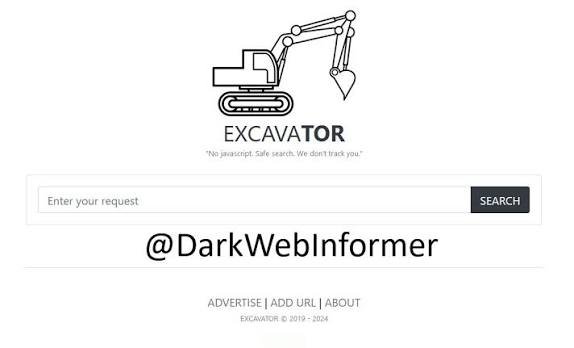
Second, it strips away unnecessary JavaScript and heavy formatting. Because Tor connections are inherently slow, Excavator presents search results in a highly lightweight, text-based format. This speeds up the search process considerably for users operating over the Tor network.
Finally, it reportedly does not require user registration. You simply load the .onion URL, type your query into the search bar, and review the results. It claims not to log IP addresses or search queries, though users should always treat such claims with a baseline of healthy skepticism.
Who Is Excavator For?
Excavator is not designed for casual browsing. Its primary utility aligns with specific professional and research-oriented intents:
- OSINT Researchers: Gathering open-source intelligence on hidden services, threat actors, or leaked databases.
- Journalists: Investigating dark web activities, tracking organized crime, or finding secure whistleblowing drop boxes.
- Cybersecurity Researchers: Monitoring new vulnerabilities, malware distribution sites, or compromised credential dumps.
- Privacy Researchers: Studying the architecture of the Tor network, censorship resistance, and anonymous communication.
- Academic Researchers: Conducting sociological, legal, or technical studies on dark web ecosystems.
Top 5 Alternatives to Excavator for Dark Web Search
While Excavator is a solid tool, no single search engine indexes the entire Tor network. Researchers typically rely on multiple engines to cross-reference data. Here are five of the most prominent alternatives.
1. Ahmia
The Ahmia search engine is one of the oldest and most well-respected dark web search engines. It operates as an open-source project and actively works to filter out abusive and illegal content, focusing instead on privacy tools, journalism platforms, and legitimate activism.
- Why it matters: It provides a safer, curated search experience for casual researchers.
- Who uses it: Journalists, privacy advocates, and academic researchers.
- Strengths: Strict content policies, clearnet proxy availability, and open-source transparency.
- Limitations: Because it aggressively filters content, it will not return results for the broader, unfiltered dark web.
- Beginner suitability: High. It is the safest starting point for newcomers to the Tor network.
2. Torch
Torch claims to have one of the largest indexes of .onion sites in existence, reportedly boasting hundreds of thousands of indexed pages. It has been operational for nearly a decade.
- Why it matters: When Excavator fails to find a niche forum, Torch’s massive database might have it archived.
- Who uses it: Deep web researchers, OSINT analysts, and general users.
- Strengths: Sheer volume of indexed pages. If a site exists, Torch probably has a record of it.
- Limitations: The interface is incredibly dated, and a large percentage of its results are dead links due to the age of its index.
- Beginner suitability: Moderate. You will need patience to sift through dead results.
3. Haystak
The Haystak search engine is a relatively newer entry that focuses heavily on providing a modern user experience. It claims to index over 1.5 billion pages and offers advanced filtering options that older engines lack.
- Why it matters: It bridges the gap between the massive index of Torch and the modern usability of Ahmia.
- Who uses it: Power users who need advanced search operators (like exact phrase matching or date filtering).
- Strengths: Massive claimed index, advanced search syntax, and active development.
- Limitations: The sheer volume of results can be overwhelming without using strict search filters.
- Beginner suitability: Moderate to high, provided the user learns basic search operators.
4. DarkDuck
DarkDuck functions as both a search engine and a dark web news portal. The site regularly publishes articles about new onion services, security updates, and marketplace closures.
- Why it matters: It combines a searchable index with editorial context, helping users understand what they are looking at.
- Who uses it: Users who want to stay updated on dark web news while searching for links.
- Strengths: Dual functionality (news + search), active community commentary.
- Limitations: The search index itself is smaller than Excavator or Haystak.
- Beginner suitability: High, due to the educational nature of the accompanying articles.
5. Not Evil
Not Evil operates on a strict anti-censorship philosophy. Unlike Ahmia, which filters content, Not Evil attempts to index everything its crawlers find, operating much like early iterations of Google did on the clearnet.
- Why it matters: It is the closest thing to an unfiltered dark web search experience.
- Who uses it: OSINT professionals and researchers who need unfiltered data for threat intelligence.
- Strengths: No censorship, deep indexing of fringe forums and obscure sites.
- Limitations: The unfiltered nature means users will frequently encounter highly illegal or disturbing content in search results.
- Beginner suitability: Low. The lack of filtering makes it dangerous for casual or inexperienced users.
Excavator vs Ahmia vs Torch vs Haystak
When researchers ask which dark web search engine is better, the answer depends entirely on what they are trying to find. To provide an immediate comparison for common queries like "Excavator vs Ahmia" or "Excavator vs Torch," here is a breakdown of how they compare functionally.
| Search Engine | Main Strength | Index Focus | Filtering | Beginner Friendly |
|---|---|---|---|---|
| Excavator | Recency/lightweight search | Active onion services | Basic | Moderate |
| Ahmia | Moderated results | Curated onion services | Stronger filtering | High |
| Torch | Large historical index | Broad onion coverage | Limited | Moderate |
| Haystak | Advanced search | Large index | Advanced | Moderate |
If your goal is to find a specific, active forum without wading through dead links, Excavator or Haystak is your best bet. If you are a journalist looking for strictly legal, privacy-focused resources, Ahmia is the superior choice. If you are doing deep historical OSINT research, Torch's massive, aging database might hold the archived data you need.
Is Excavator Search Engine Safe?
This is one of the most common questions users have before loading the .onion URL. The short answer is: using the search engine itself is relatively safe, but the environment it exposes you to is not.
Excavator is a search/indexing service; using it does not by itself guarantee anonymity or security. It is simply a directory. The search engine itself reportedly does not serve malicious scripts or malware directly on its homepage. However, the search results it returns point to the unregulated dark web.
Clicking on the wrong result can expose you to common hacking techniques, such as drive-by downloads or phishing portals designed to steal your credentials. Threat actors frequently purchase expired .onion domains and turn them into traps, relying on search engines to funnel traffic to them. Learning how hackers hack accounts helps you recognize these traps, like fake login screens that request your PGP keys or marketplace passwords.
To use Excavator safely, you must have your Tor Browser locked down to the "Safest" security setting, and you must never download files or input personal data based on a search result.
Is Excavator Legit?
Questioning the legitimacy of dark web tools is a necessary practice. When users ask if Excavator is "legit," they are usually asking two things: does it actually do what it claims to do, and is it a law enforcement honeypot?
Available observations suggest that Excavator functions as an indexing tool, but its operators and internal infrastructure cannot be independently verified. It does return relevant results for known onion addresses, and it is not an obvious scam designed solely to steal cryptocurrency or credentials.
However, establishing absolute legitimacy on the dark web is impossible without independent code audits. The operators remain anonymous. There is no way to definitively prove it is not an intelligence-gathering operation, just as there is no way to prove that for any other Tor search engine.
Understanding different types of hackers is relevant here; state-sponsored threat actors often run seemingly helpful infrastructure to map user behavior. Because of this, researchers should never assume a search engine is entirely benign. Always verify the URLs you find on Excavator against trusted directory sources, such as the Excavator official onion link page on OnionLink or DarkStats, before interacting with them. Knowing how hackers break into computers through seemingly innocuous links is the best defense against compromised indexes.
How to Safely Use Excavator and Tor Search Engines
Using dark web search engines requires a strict adherence to operational security. The process is fundamentally different from browsing the clearnet.
First: Foundation setup
You must download the official Tor Browser from the Tor Project website. Never use proxy services, custom browsers, or extensions that claim to give you Tor access. Understanding what a Tor browser is, including its legality, safety, and tracking in 2026 is the most critical step before you type a single search query. You must also disable JavaScript in the Tor browser's security settings (set to "Safest") before loading any search results.
Next: Fix common search habits
Stop clicking on the first result you see. Dark web search engine results are frequently gamed by malicious actors. Always check the URL carefully, looking for subtle misspellings of the site you actually intend to visit.
Finally: Improve your research strategy
Use Excavator and its alternatives as starting points, not final destinations. When you find a relevant forum or marketplace via a search engine, do not interact with it immediately. Bookmark the URL, verify it against trusted community sources, and observe the site for a few days to ensure it is legitimate and operational. If you ever suspect you have clicked a malicious link, knowing how to tell if your device has been hacked is crucial for mitigating potential damage.
Common Problems & Fixes
Problem: Endless captcha loops when loading search results
Fix: This usually happens when your Tor browser's security slider is set too low, allowing scripts to run that trigger anti-bot protections. Set your security level to "Safest" to disable JavaScript. If the site still will not load without JavaScript, it is often better to avoid it entirely.
Problem: Clicking a search result leads to a scam page
Fix: Scammers buy dead .onion domains and set up fake login portals. Never trust a search engine link blindly. Cross-reference the URL on a trusted forum to ensure the domain belongs to the legitimate entity.
Problem: The search engine itself is offline
Fix: Dark web infrastructure is notoriously fragile. If Excavator is down due to DDoS attacks or server maintenance, do not panic. Keep a list of alternatives—like Ahmia or Haystak—bookmarked and switch to those temporarily. You can also check threat intelligence sites to see if the downtime is part of a larger network issue.
Pro Tips
- Use boolean operators: If Excavator or Haystak supports them, use quotation marks for exact phrases and minus signs to exclude terms. Searching "data breach" -marketplace yields much cleaner OSINT results than just typing "data breach".
- Search for PGP keys, not just sites: If you are looking for a specific vendor or entity, search for their PGP fingerprint rather than their name. It is much harder to fake a PGP key than a username. If you need a refresher on this, understanding what PGP is and how it works is highly recommended.
- Leverage cached versions: If a link is dead, check if the search engine provides a cached text snapshot. Even if the site is gone, the text index often remains, which can be invaluable for OSINT gathering.
- Monitor search trends over time: Searching for a term once gives you a snapshot. Searching for it monthly tells you a story about emerging threats, new marketplaces, or shifting trends within the hidden ecosystem.
Safety & Best Practices
You need to set honest expectations about what a dark web search engine can and cannot do. Excavator is a search/indexing service; using it does not by itself guarantee anonymity or security. Your safety relies entirely on your browser configuration and your personal behavior.
Never download files directly from search engine results, even if they appear to be legitimate documents. Executables, PDFs, and compressed folders are common vectors for malware that can de-anonymize your Tor connection. If you want to understand the broader threat landscape, exploring what hacking actually entails provides necessary context.
Recognize the legal limitations. Simply searching for information on Tor exists in a gray area—though debates around whether the Hidden Wiki is legal highlight the differences between hosting and browsing. A search engine does not grant immunity from law enforcement monitoring. Exit nodes on the Tor network can monitor unencrypted traffic, so ensure any data you send or receive is end-to-end encrypted.
For users looking to add an extra layer of network obfuscation, reviewing a Tor vs. VPN safety and privacy comparison for 2026 is a practical step, though a VPN is never a replacement for proper Tor usage. Security researchers often study what ethical hacking is to better understand how to navigate these spaces defensively. Above all, knowing how to protect yourself from hackers is the ultimate determining factor in whether your dark web research remains safe.
Related Guides
- Beginner Setup Guide for Dark Web Search
- Deep Web vs Dark Web: Understanding the Layers
- Best Tools for OSINT Researchers
FAQ
Does Excavator track what I search for? Excavator claims it does not log your IP address or search queries. However, because the dark web requires a high baseline of skepticism, you should always assume your traffic could be monitored at the exit node and avoid typing identifying information into any search bar.
Why are most of my Excavator search results dead links? The Tor network is highly transient. Sites frequently change their .onion addresses to avoid law enforcement or rival attacks, or they simply shut down. A search engine index is always slightly out of date, resulting in a high percentage of dead links.
Can I use Excavator without the Tor browser? No. Excavator is hosted as a .onion hidden service. It can only be accessed by routing your traffic through the Tor network using the official Tor Browser.
Is it illegal to use dark web search engines? Using a dark web search engine is not inherently illegal in many jurisdictions, but laws vary by country and what you access or do through the service can create legal issues.