


If you're trying to navigate the dark web, you're not alone. Choosing the right tool to find onion links is a common hurdle, and it often happens because beginners assume all dark web directories work the same way. Many people struggle because they don't understand the difference between a human-curated link list and an actual search engine.
In this guide, you'll learn:
- What the Hidden Wiki and Ahmia actually are
- Why one is significantly safer than the other
- What current cybersecurity guidance says about these tools
- Practical ways to find onion links without getting hacked
- Common mistakes beginners make
Keep it conversational. Avoid fluff.
Quick Answer
Ahmia is significantly safer for beginners than The Hidden Wiki. Ahmia is an algorithmic search engine that indexes .onion sites and can be accessed via the regular web. The Hidden Wiki is an unmoderated, human-curated directory filled with phishing links, malware, and scams. For safe research, Ahmia or verified clearnet directories are the standard choice.
Evidence Snapshot
| Topic | Current Status |
|---|---|
| Hidden Wiki Safety | High risk (unmoderated, scam-heavy) |
| Ahmia Safety | Moderate risk (algorithmic, clearnet-accessible) |
| Link Verification | Hidden Wiki has none; Ahmia has basic moderation |
| Current Consensus | Security professionals avoid The Hidden Wiki entirely |
What Is The Hidden Wiki?
To understand the comparison, you first need to know what you are dealing with. If you are new to this space, understanding what is the dark web is step one.
The Hidden Wiki is essentially an unmoderated message board of hyperlinks. To understand why it's so risky, reading The Hidden Wiki Explained provides a full breakdown of its history.
Because anyone can edit it, attackers use it to post malicious links. Is The Hidden Wiki Safe? For beginners, the answer is a resounding no. Furthermore, because finding the Hidden Wiki URL usually involves searching Google, you are highly likely to click on a fake, phishing clone before you even reach the real site.
What Is Ahmia?
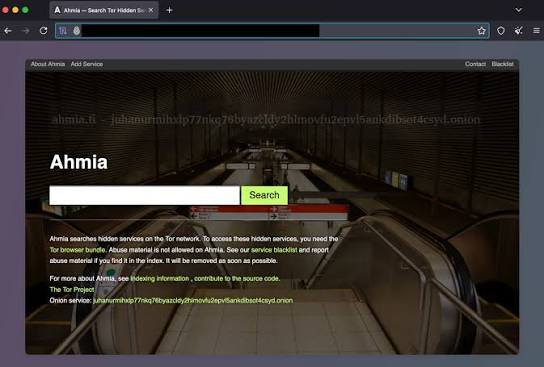
Ahmia is fundamentally different. It is a legitimate dark web search engine.
Instead of a static list of links, Ahmia uses automated web crawlers (similar to Google) to discover and index .onion websites. It also allows site owners to manually submit their pages to be indexed.
Our Ahmia Search Engine Explained guide goes deeper into its crawling methods, but the key takeaway is that Ahmia provides a layer of algorithmic filtering that a human-edited wiki completely lacks.
Current Research or Industry Status
Cybersecurity experts currently know that the traditional wiki format is obsolete and dangerous.
Observational findings indicate that The Hidden Wiki is now primarily a tool for scammers. This explains why phishing is still so successful on the dark web—attackers know beginners will look for the wiki and strategically place traps there.
In contrast, current evidence suggests that tools like Ahmia, while not perfect, represent a more structured approach to dark web navigation.
Why This Happens
The confusion happens because beginners expect the dark web to have a "homepage." They look for a directory like The Hidden Wiki because it feels familiar.
However, the dark web does not have a central index. When you use The Hidden Wiki, you are trusting anonymous, unverified users who can post whatever they want. When you use Ahmia, you are using a software program to search for keywords, which inherently filters out some of the low-effort spam.
Why It Matters
Choosing the wrong tool can compromise your device within seconds.
If you click a malicious link on The Hidden Wiki, you might download ransomware or hand over your credentials to a fake login page—which is a prime example of what is hacking in the modern era.
Additionally, clicking the wrong link can drag you into illegal territory. Understanding is the dark web illegal and is the hidden wiki legal helps you realize that while browsing is legal, interacting with illegal content found on unmoderated wikis is not.
Hidden Wiki vs Ahmia: How They Compare
Step 1: Access Method
The Hidden Wiki requires you to already have a .onion URL to access it, which forces you to use unreliable search engines to find it. Ahmia can be accessed directly from your regular (clearnet) browser, though searching .onion results still requires the Tor browser.
Step 2: Content Verification
The Hidden Wiki has zero verification. A link to a popular forum like Dread Forum might actually be a phishing clone. Ahmia indexes the actual sites, making it slightly harder for attackers to push fake domains to the top of the results.
Step 3: The Type of Results
The Hidden Wiki manually lists links to various darknet markets and services. Ahmia returns search results based on the keywords you type, much like a standard Google search.
Common Mistakes
Mistake: Assuming Ahmia is 100% safe. Why it happens: Beginners hear it is safer and let their guard down. How to avoid it: Ahmia indexes the dark web. It will still show you illegal or malicious sites in its results. It is a safer tool, but the destination is still your responsibility.
Mistake: Using The Hidden Wiki out of convenience. Why it happens: The wiki categorizes links neatly, making it easy to click around. How to avoid it: The convenience is a trap. Follow our guide on how to stay safe while researching the dark web and avoid unmoderated lists entirely.
Mistake: Downloading files from Ahmia search results. Why it happens: Users find a "software" link via Ahmia and download it. How to avoid it: Ahmia does not verify the safety of downloaded files. Treat the dark web as strictly read-only.
Factors That Affect Results
- Search Queries: If you search for illegal terms on Ahmia, you will find illegal sites. The tool is neutral.
- Uptime: The Hidden Wiki links die constantly. Ahmia’s crawlers regularly update which sites are online.
- Indexing Lag: Ahmia does not index the entire dark web. It only knows about sites that are linked publicly or submitted to it.
Comparison Table: Hidden Wiki vs Ahmia
| Feature | The Hidden Wiki | Ahmia Search Engine |
|---|---|---|
| Type | Human-curated link directory | Automated search engine |
| Access | Tor browser only (requires finding URL first) | Accessible via clearnet and Tor |
| Moderation | None (anyone can post a link) | Basic algorithmic filtering |
| Phishing Risk | Extremely high (links are often fake clones) | Moderate (results are harder to fake) |
| Best For | Historical context only (not recommended) | Searching for specific .onion keywords safely |
What Current Evidence Suggests
| Topic | Evidence Strength | Current Consensus |
|---|---|---|
| Safety of The Hidden Wiki | High | Universally considered dangerous for beginners. |
| Safety of Ahmia | Moderate | Considered the minimum standard for safe dark web searching. |
| Best Alternative | High | Verified clearnet directories (like OnionLink) are preferred over both. |
Pro Tips
- Use Ahmia to find the official URL of a site, then bookmark it. Don't rely on it for casual browsing.
- Never trust a link just because it shows up in a search. If Ahmia takes you to a marketplace, verify that URL against a trusted clearnet directory like OnionLink before interacting with it.
- Keep up with dark web news to know which search engines or directories are currently compromised.
Safety / Best Practices
Follow reliable guidance from cybersecurity organizations. Verify information through trusted resources.
Understand the limitations of search engines. Ahmia cannot protect you from your own actions. If you find a site via Ahmia and proceed to log in or buy something, you are still at risk.
Advanced researchers often use tools like what is PGP to verify the authenticity of the sites they find through search engines.
Related Guides
- Pillar Page: For a complete breakdown of the directory, read: The Hidden Wiki Explained.
- Deep Dive: To understand how Ahmia's algorithms work, read: Ahmia Search Engine Explained.
- Legal Guide: To understand the boundaries of using these tools, read: Is The Hidden Wiki Legal.
Frequently Asked Questions
Is Ahmia better than The Hidden Wiki? Yes. Ahmia is significantly better because it is an algorithmic search engine with basic moderation, whereas The Hidden Wiki is an unmoderated list of links heavily populated by scammers.
Which search engine is safer? Ahmia is safer than The Hidden Wiki. However, verified clearnet directories like DarkStats or OnionLink are generally considered the safest options because they manually verify links and actively flag scams.
Does Ahmia verify onion links? Ahmia uses automated web crawlers to verify that a .onion site is online and index its content. However, it does not manually verify the legitimacy or legality of the site's operators. It verifies existence, not trustworthiness.
Should beginners use Ahmia? Yes, beginners should use Ahmia over The Hidden Wiki if they want to search for .onion sites. However, they must still use the Tor browser, keep JavaScript disabled, and avoid downloading files or creating accounts.
Can I access Ahmia without Tor? Yes, you can access the Ahmia clearnet website using a standard browser like Chrome or Firefox to search for .onion URLs. However, to actually visit the .onion search results, you must copy the URL into the Tor browser.
Why is The Hidden Wiki so dangerous? The Hidden Wiki is dangerous because it has no moderation. Attackers post links to fake marketplaces, phishing pages, and malware downloads. Because beginners don't know what a legitimate .onion URL looks like, they easily fall for these traps.
Key Takeaways
- Main takeaway: Ahmia is vastly safer than The Hidden Wiki because it relies on automated indexing rather than anonymous, unmoderated human submissions.
- Important limitation: Ahmia is a search tool, not a safety filter. It will still show you malicious sites if you search for them.
- Most common mistake: Assuming a neatly categorized Hidden Wiki page is trustworthy.
- Best practice: Use Ahmia to find URLs, but cross-reference those URLs on a verified clearnet directory before visiting them.
- Current evidence: The traditional Hidden Wiki model is dead; modern researchers use search engines or verified indexes.
- Next step: Bookmark the Ahmia clearnet homepage and a verified clearnet directory like OnionLink.
Conclusion
When comparing The Hidden Wiki vs Ahmia, the winner for beginners is clear. The Hidden Wiki is an outdated, dangerous trap filled with phishing links and scams. Ahmia represents a modern, algorithmic approach to dark web navigation that significantly reduces your risk of clicking a fake clone.
However, no dark web search engine is foolproof. The safest approach in 2026 is to use Ahmia or search engines to find a specific URL, and then verify that URL on a trusted clearnet directory before you ever click it. To continue learning about safe navigation, explore our related guides.