


Quick Answer
The ahmia search engine is an open-source tool designed to index Tor hidden services. It is widely considered the safest dark web search engine for beginners because it actively moderates its results and blocks illegal content, unlike unfiltered alternatives.
Pros and Cons
Pros
- Moderated search results keep illegal and abusive content out of your feed.
- Beginner friendly due to its clean interface and strict safety filters.
- Open source, meaning its code is publicly available for security audits.
- Clearnet access allows you to preview .onion links without using Tor.
- Community reporting lets users actively help clean up the index.
Cons
- Smaller index compared to unfiltered competitors.
- Misses obscure or newly created hidden services that fail moderation checks.
- Some downtime occurs during DDoS attacks or Tor network congestion.
- Can over-filter content, occasionally blocking legitimate privacy research sites.
Ahmia vs Haystak
Many users searching for ahmia want to know immediately how it compares to its biggest rival. Here is the core breakdown:
| Feature | Ahmia | Haystak |
|---|---|---|
| Safety | High (Actively moderated) | Moderate (Relies on user-toggled filters) |
| Index Size | Medium (Curated) | Massive (Over a billion pages) |
| Spam Levels | Low | Higher |
| Clearnet Access | Yes | No |
| Best For | Beginners, journalists, safe browsing | Deep research, OSINT, finding obscure sites |
What Is Ahmia?
Ahmia is a specialized search engine built exclusively for the Tor network. While standard search engines ignore .onion websites, Ahmia actively crawls and indexes them to create a searchable directory.
What sets the ahmia search engine apart is its strict approach to content moderation. Most dark web engines act as unfiltered firehoses, displaying every link they find. Ahmia takes the opposite approach, curating its index to remove abusive and spammy content. This makes it a highly practical starting point for anyone exploring the hidden web without wanting to run into severe safety risks.
Is Ahmia Still Working in 2026?
Yes, Ahmia is still fully operational in 2026. However, its availability can fluctuate due to the nature of the Tor network.
- Current status: The engine is actively maintained, and its crawlers continue to index new sites daily.
- Downtime issues: Like all hidden services, Ahmia occasionally suffers from intermittent timeouts. This is usually caused by DDoS attacks or node congestion.
- Official mirrors: To combat downtime, Ahmia offers both a clearnet website and a .onion hidden service. If the Tor network is slow, you can use the clearnet version to search for .onion links.
- Availability: You can generally expect it to be online, but keeping both URLs bookmarked is a smart practice.
A Brief History of Ahmia
Ahmia was created by a developer named Juha Nurmi around 2014. Nurmi built the project with a specific philosophical goal: to provide a searchable, ethical gateway to the Tor network. Unlike other dark web search tools that operate in the shadows, Ahmia was developed as an open-source project from the very beginning. This transparency allowed the privacy community to audit its code, verifying that it did not track users.
How Ahmia Works
Understanding the mechanics behind ahmia helps explain why it is so much safer than its competitors. The system relies on four main components:
- Crawlers: Ahmia uses specialized web spiders that operate within the Tor network to read page data and record metadata.
- Moderation system: Before a site is added to the public index, it passes through automated filters designed to detect illegal material and phishing clones.
- Community reporting: Ahmia provides a simple tool for users to report abusive sites. Moderators review these reports and remove offending URLs.
- Indexing process: Once a site passes moderation, its title, description, and URL are stored in Ahmia's database for you to search.
Key Features
- Content Blacklisting: Actively blocks illegal content to keep the index clean.
- Clearnet Access: One of the few dark web search engines accessible via a standard browser.
- Open-Source Code: Anyone can view the codebase to verify its privacy claims.
- Site Submission: Webmasters can legally submit their own hidden services to gain visibility.
Who Should Use Ahmia?
Because of its curated nature, Ahmia is perfect for specific types of users.
- Beginners: Highly recommended. It prevents accidental exposure to disturbing content.
- Journalists: Excellent for finding whistleblowing platforms without the noise of black-market sites.
- Casual Users: Perfect for those simply curious about the dark web who want a safe, controlled experience.
Who Should NOT Use Ahmia?
Ahmia may not be ideal for everyone. If you fall into the following categories, you might find the platform frustrating:
- OSINT investigators who need comprehensive data.
- Threat researchers tracking emerging cybercriminal forums.
- Advanced darknet researchers looking for unfiltered, raw network data.
- Users seeking comprehensive indexing of every single .onion site in existence.
Those users are usually better served by unmoderated alternatives. If you need a massive index and understand the associated risks, reading about how the Haystak search engine operates will explain why it is the preferred tool for deep researchers.
Official Ahmia URL Verification
Because search engines are high-value targets, attackers frequently create fake copies to phish users.
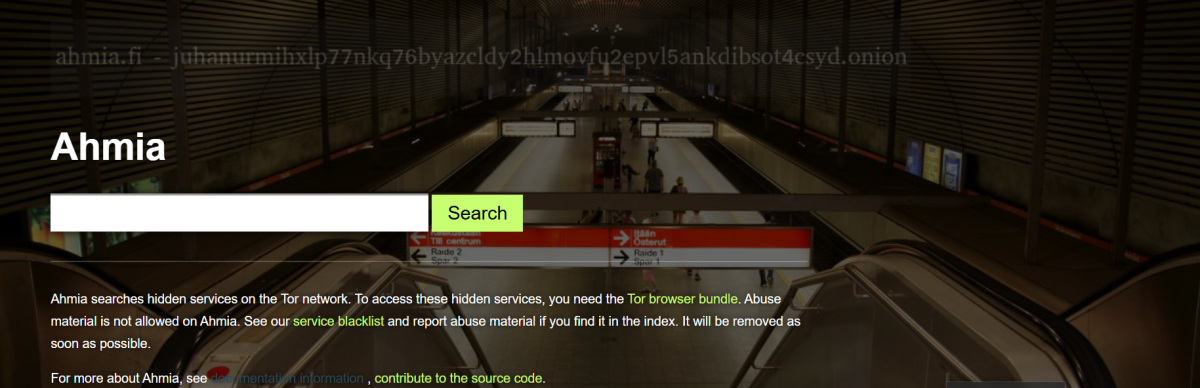
- Official clearnet URL: The only legitimate clearnet address is ahmia.fi.
- Official onion URL: The .onion address changes occasionally for security reasons, but it is always published directly on the official ahmia.fi website.
- How to spot fake mirrors: Fake mirrors often use slightly misspelled domains or feature aggressive pop-up ads.
- Verification rule: Verify links only through the Ahmia project page itself, official Tor Project documentation, or highly reputable privacy communities. Never trust random link directories.
Best Alternatives to Ahmia
If Ahmia does not meet your needs, there are a few other options in the ecosystem:
- Haystak: Best for researchers who need a massive, unfiltered index.
- DuckDuckGo Onion: Best for searching the standard internet anonymously through Tor.
- notEvil: A niche engine that attempts to filter out illicit content, though less transparent than Ahmia.
- DarkDuck: A small directory focused exclusively on privacy tools and cybersecurity resources.
How to Use Ahmia Safely
While Ahmia provides safer search results, you still need to practice good operational security.
- Use the Tor Browser: Even if you use Ahmia's clearnet site to search, always open the actual .onion results using the Tor Browser.
- Disable JavaScript: Set your Tor Browser security level to "Safest." Ahmia's clearnet site might look broken, but this setting protects you when you click away to a result.
- Do not download files: Never download executables or media files from random .onion sites.
- Secure your communications: If you plan to interact with any communities you find, learning how to create a PGP key is essential for keeping your messages private.
- Check network health: If Ahmia won't load, you can monitor dark web network statistics to see if the issue is a network-wide outage rather than a problem with your browser.
Common Problems and Fixes
Problem 1: Ahmia search results show "Connection Timed Out" Fix: This means the specific hidden service you clicked on is offline, not that Ahmia is broken. Try again later.
Problem 2: Ahmia's clearnet site won't load Fix: If ahmia.fi is down due to clearnet DDoS attacks, use the Tor Browser to access Ahmia's official .onion mirror instead.
Problem 3: My search returns zero results Fix: Ahmia's index is curated and smaller than unfiltered engines. Try broadening your search terms, or accept that Ahmia may have intentionally blacklisted the site.
FAQs
Is Ahmia legal? Yes. Ahmia is simply a search directory. It is completely legal to use in almost all jurisdictions, though the legality of the sites you click on depends on your local laws.
Is Ahmia open source? Yes. Ahmia’s codebase is publicly available, allowing security researchers to verify that it does not track users or log IP addresses.
Who created Ahmia? Ahmia was created by a developer named Juha Nurmi in 2014 as an ethical, transparent gateway to the Tor network.
What is the official Ahmia URL? The official clearnet URL is ahmia.fi. The official .onion URL changes periodically for security, but it is always listed on the clearnet site.
Does Ahmia search all onion sites? No. Ahmia only searches sites that have passed its moderation filters. It intentionally excludes illegal, abusive, and spam-related hidden services.
Conclusion
For anyone looking to explore the Tor network without unnecessary risks, ahmia is the best starting point. Its commitment to open-source development and active content moderation makes it a much safer environment than unfiltered alternatives. By understanding how it works and how it compares in the ahmia vs haystak debate, you can choose the right tool for your specific needs and browse the dark web with confidence.