



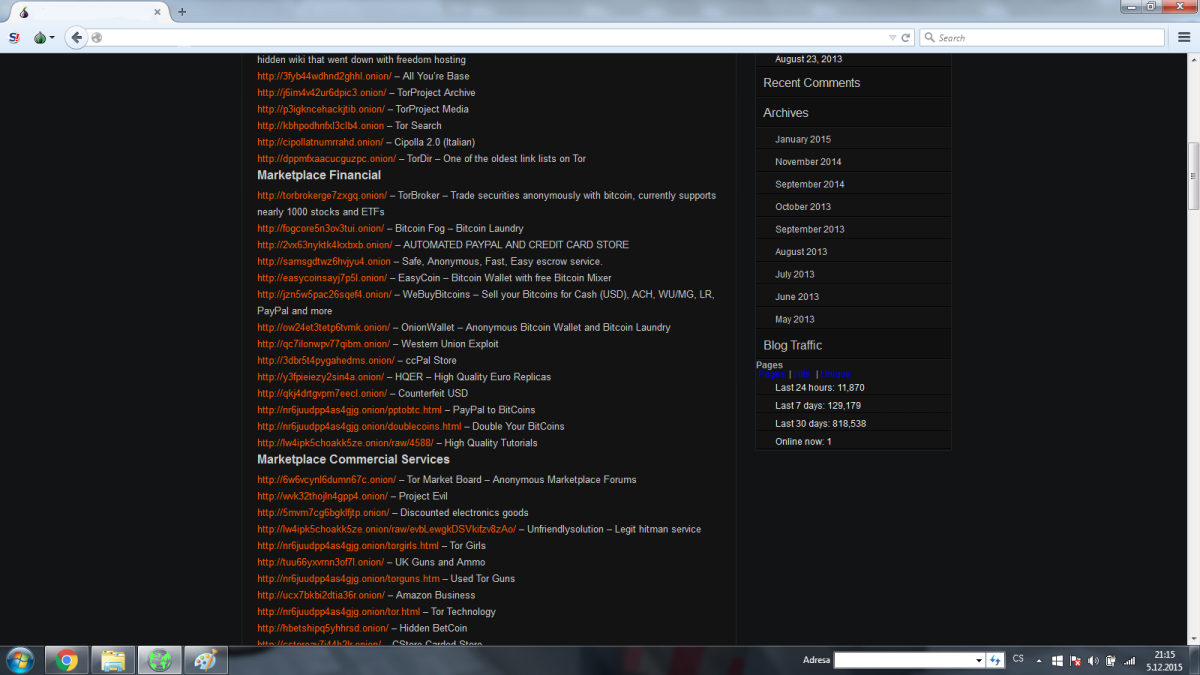
If you're searching for the Hidden Wiki URL, you're not alone. This is a common issue, and it often happens because beginners assume the dark web works like the regular internet. Many people struggle because they rely on standard search engines, leading them straight to phishing traps.
In this guide, you'll learn:
- What the Hidden Wiki URL actually is
- Why finding the "real" link is nearly impossible
- Why onion URLs change so often
- What current expert guidance says about these directories
- Practical ways to avoid fake onion links
Keep it conversational. Avoid fluff.
Quick Answer
There is no single, real Hidden Wiki URL. The original Hidden Wiki and several later versions have been taken offline or seized over the years. Today, searching for a hidden wiki URL will mostly return phishing clones designed to steal your information. The safest way to find working onion links is to use verified clearnet directories rather than looking for the wiki itself.
Evidence Snapshot
| Topic | Current Evidence |
|---|---|
| Original Wiki Status | Offline for years (seized or abandoned) |
| Active Clones | Hundreds exist, mostly unverified |
| Google Search Results | Observational findings suggest a large proportion of results are unverified, outdated, or malicious |
| Current Consensus | Use curated clearnet indexes instead of static lists |
What Is the Hidden Wiki URL?
To understand the URL, it helps to know how the network operates. If you are new to this space, understanding what is the dark web is the first step.
The Hidden Wiki was originally a directory of .onion links, acting as a starting point for hidden sites. The Hidden Wiki URL is simply the .onion web address used to access this directory. Unlike regular websites that use .com or .org, .onion addresses are long, random strings of characters.
Because these addresses are impossible to remember, people search for them online. You access these directories using the Tor browser. Unfortunately, searching for these URLs is exactly where the danger begins.
Current Research or Industry Status
Cybersecurity experts currently know that the traditional Hidden Wiki model is effectively dead.
What remains are hundreds of unmanaged clones. Observational findings indicate that attackers use search engine optimization (SEO) to push their fake Hidden Wiki URLs to the top of Google results.
Ongoing developments suggest that attackers increasingly use automated content generation to make phishing pages appear more convincing. Early evidence shows that these cloned sites are primarily used to distribute malware—a primary tactic in what is hacking today—or to phish cryptocurrency wallets, which explains why phishing is still so successful on these platforms.
Why This Happens
The root cause of this problem comes down to wrong assumptions and technical limitations.
Many beginners assume the Hidden Wiki is like Wikipedia—a single, permanent website with one official address. In reality, the original Hidden Wiki and several later versions have been taken offline or seized over the years.
Furthermore, standard search engines like Google cannot crawl the dark web. When you Google "Hidden Wiki URL," you are not finding the site itself. You are finding surface web articles that list URLs, and many of those articles are outdated or intentionally malicious.
Why It Matters
Understanding this topic is crucial because clicking a fake Hidden Wiki URL can compromise your device and your identity within seconds.
Beginners get confused because they don't understand how .onion addresses work. Misinformation spreads because outdated blogs still rank on Google, listing URLs that have been taken over by hackers. Clicking on the wrong link can quickly drag you into illegal territory, crossing the line into areas where is the dark web illegal becomes a serious personal concern.
Why Onion URLs Change So Often
If you are wondering why a Hidden Wiki URL works one day and dies the next, it helps to understand how the Tor network operates. Onion URLs change frequently due to four main reasons:
- Law Enforcement Seizures: Authorities routinely take down directories, rendering the URL permanently inaccessible.
- DDoS Attacks: Rival directories or malicious actors frequently overwhelm servers. To escape the attack, administrators often migrate the site to a new .onion address.
- Service Migration: If a hidden service moves to a new server, the cryptographic key changes, which automatically generates a new, completely different URL.
- Administrator Changes: Because these sites are anonymous, the original creator may simply disappear. If a new person takes over, they usually launch a fresh site with a new URL.
This constant shifting is exactly why static lists and old forum posts are so dangerous.
How to Find Safe Links (Without the Wiki)
If you want a complete framework for browsing securely, reading about how to stay safe while researching the dark web is essential. In the context of finding links, follow these steps:
Step 1: Stop Googling for the URL
This is the most important step. Do not use Google, Bing, or YouTube to find .onion links. The results are heavily manipulated by scammers.
Step 2: Use Verified Clearnet Directories
Instead of a wiki, use modern, curated directories. Sites like DarkStats monitor onion links for uptime and verify their legitimacy before listing them.
Step 3: Cross-Reference Everything
If you do find a Hidden Wiki URL on a random board, never visit it directly. Check if that same URL is listed on a trusted directory first. For advanced verification, understanding what is PGP can help you verify the cryptographic signatures of legitimate sites.
Common Mistakes
Mistake: Trusting the first Google result. Why it happens: Users naturally assume the top result is the most authoritative. How to avoid it: Attackers use SEO poisoning to rank first. Ignore Google results for .onion links entirely.
Mistake: Assuming an "official" wiki exists. Why it happens: Misinformation from old articles. How to avoid it: Accept that the original wiki is gone. Any site claiming to be the "official" Hidden Wiki in 2026 is lying.
Mistake: Typing a URL from a YouTube video or forum. Why it happens: Video tutorials or community boards like Dread Forum seem trustworthy. How to avoid it: Links in videos go dead quickly, and forum users can be compromised. Only trust written directories that actively monitor link status.
Factors That Affect Results
- Timing: A legitimate Hidden Wiki URL might work today and be seized tomorrow. Static lists cannot keep up with this pace.
- Source Quality: A link shared on a verified clearnet directory is much safer than a link shared on an anonymous imageboard.
- Browser Settings: Even a safe URL can be dangerous if your Tor browser is misconfigured. Always use the "Safest" security setting.
Comparison Table: Methods for Finding Onion Links
| Method | Advantages | Limitations |
|---|---|---|
| Googling "Hidden Wiki URL" | Easy and fast | Extremely high risk of phishing clones |
| Dark Web Search Engines | Finds specific keywords | Often indexes malicious sites |
| Verified Clearnet Directories | Safe, updated, flags scams | Does not list every single .onion site |
| Word of Mouth / Forums | Can find niche sites | High risk of outdated or trap links |
What Current Evidence Suggests
| Topic | Evidence Strength | Current Consensus |
|---|---|---|
| Danger of Fake Wiki URLs | High | Widely documented by cybersecurity firms |
| Safety of Clearnet Directories | High | The industry standard for safe research in 2026 |
| Existence of an "Official" URL | None | Confirmed offline; no successor exists |
Pro Tips
- Use a password manager. If you accidentally visit a fake Hidden Wiki login page, your password manager will not autofill your credentials because the .onion URL won't match the saved domain.
- Bookmark a single, trusted directory instead of searching for links every time.
- If a site asks you to enable JavaScript to view the Hidden Wiki, close it immediately. Legitimate directories work perfectly with JavaScript disabled.
Safety / Best Practices
Follow reliable guidance from cybersecurity professionals. Verify information through trusted resources.
Understand the limitations of the dark web—there is no central authority to police URLs. Use trusted resources like DarkStats to filter out the noise. Staying updated on dark web news helps you track which directories are currently compromised.
Avoid unsupported claims from random users on forums offering "the real, new official Hidden Wiki link," especially when those links point to unverified darknet markets or illegal content.
Related Guides
- Pillar Page: For a complete deep dive into the history, risks, and alternatives, read our full guide: The Hidden Wiki Explained.
FAQ
What is the real Hidden Wiki URL? There is no single real URL. The original Hidden Wiki and several later versions have been taken offline over the years. Today, there are only unverified clones. Searching for a definitive URL is highly dangerous.
Is there an official Hidden Wiki? No. Since the original site went offline, no official successor has emerged. Any dark web site or clearnet article claiming to link you to the "official" Hidden Wiki is likely trying to scam you.
Why are there so many fake Hidden Wiki websites? Attackers create fake wikis because they know beginners will search for them. By putting their malicious .onion links at the top of Google results, they can easily steal passwords, cryptocurrency, or infect devices with malware.
How do I verify a Hidden Wiki link? You verify it by cross-referencing it on trusted clearnet directories. If a Hidden Wiki URL is not listed on a reputable, actively monitored index, you should assume it is a phishing clone or a honeypot.
Why do Hidden Wiki links always change? Onion links change due to law enforcement seizures, DDoS attacks, server migrations, or changes in administration. When a site is attacked or seized, it is forced to move to a new .onion address.
Key Takeaways
- Main takeaway: There is no official Hidden Wiki URL in 2026; the landscape is entirely made up of unverified clones.
- Important limitation: No tool can automatically tell you if a random .onion link is 100% safe.
- Most common mistake: Googling for the URL and clicking the first result.
- Best practice: Rely on curated clearnet directories that actively monitor and verify onion links.
- Current evidence: Observational findings show a large proportion of search results for this keyword are malicious.
- Next step: Stop searching for the wiki and bookmark a verified clearnet directory instead.
Conclusion
Searching for the Hidden Wiki URL is one of the most dangerous things a beginner can do on the dark web. Because the original site is gone and URLs constantly change due to seizures and migrations, relying on static lists exposes users to a high risk of phishing websites and malware.
By shifting your mindset from "finding the wiki" to "using verified directories," you instantly remove the biggest risk to your security. To learn more about how these directories work and how to navigate safely, continue reading our complete guide on The Hidden Wiki Explained.