


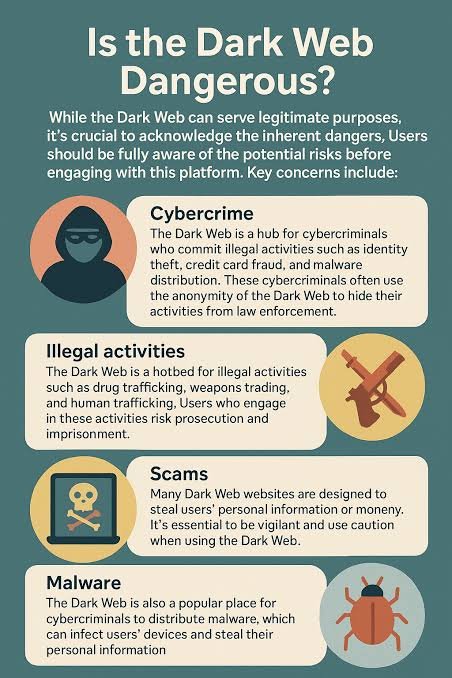
If you're wondering whether accessing the dark web will get you arrested, you're not alone. This is a common concern, and it often happens because news outlets and movies blur the lines between privacy tools and criminal behavior.
Many beginners struggle to understand the legal reality due to outdated information, misunderstanding how the technology works, or relying on unreliable sources.
In this guide, you'll learn:
- What the dark web actually is
- Why legal confusion happens
- What current research and legal guidance say
- Practical ways to understand the risks
- Common mistakes to avoid
Quick Answer
No, the dark web itself is not illegal. It is simply a hidden part of the internet requiring special software, like Tor, to access. While using the network is legal in most countries, using it to buy illegal goods, share restricted content, or engage in criminal activity is strictly against the law.
Evidence Snapshot
| Topic | Current Legal & Security Status |
|---|---|
| Accessing the dark web | Generally legal |
| Using the Tor browser | Legal in most countries |
| Purchasing illicit goods | Strictly illegal |
| Law enforcement activity | High (routine monitoring) |
| Current legal consensus | Browsing is legal; actions dictate legality |
What Is the Dark Web?
The internet is divided into layers. The surface web is what you see on Google. The deep web includes private emails, bank accounts, and medical records.
The dark web is a small subsection of the deep web that is intentionally hidden. It requires specific networks, most commonly Tor (The Onion Router), to access.
People use it for legitimate privacy, but it also hosts hidden sites. For example, what are darknet markets exactly? They are hidden commercial sites that often operate in legally gray or black areas, contributing to the network's controversial reputation.
Current Research or Industry Status
Cybersecurity researchers and legal experts currently understand that the dark web is a dual-use environment. It serves as a vital tool for journalists, activists, and whistleblowers.
However, current evidence suggests it remains a persistent hub for cybercrime. What remains uncertain is the exact scale of illegal versus legal traffic, as anonymity makes accurate data collection difficult.
Ongoing developments include advanced tracking methods used by law enforcement to target malicious actors without compromising the privacy of everyday users. You can see how experts track these developments by looking at how security researchers verify dark web news.
Why This Happens
The confusion surrounding the legality of the dark web stems from a few root causes:
- Wrong assumptions: Media often equates the dark web entirely with crime, ignoring its legitimate uses.
- Outdated information: Early dark web history was heavily dominated by illicit sites, which framed public perception.
- Technical limitations: Because the network is hard to monitor, rumors spread faster than verifiable facts.
- Guilt by association: Seeing illegal marketplaces listed on directories makes people assume the underlying technology is banned.
Why It Matters
Understanding the legal boundaries is crucial because crossing them—even accidentally—can result in severe consequences. Beginners often get confused and click on links out of curiosity.
Misinformation spreads easily in this space, leading people to take unnecessary risks. Knowing the difference between a legal privacy tool and an illegal marketplace protects you from potential legal trouble and cybersecurity threats.
How to Understand Dark Web Legality
Step 1: Separate the tool from the action Downloading Tor is like buying a car. The car is legal. How you drive it—whether you obey speed limits or use it to rob a bank—determines the legality. According to the Tor Project and digital rights organizations such as the Electronic Frontier Foundation (EFF), Tor itself is a legitimate privacy technology used by journalists, researchers, and ordinary internet users. Law enforcement agencies, including the U.S. Department of Justice (DOJ) and Europol, focus their efforts on the criminal activities occurring on the network rather than the use of the software itself. Additionally, cybersecurity agencies like CISA recognize Tor as a tool that, while exploited by threat actors, has valid security applications.
Step 2: Understand your local laws While Tor is legal in most democracies, some authoritarian countries restrict or ban its use. Always check your jurisdiction's specific telecommunications laws.
Step 3: Recognize what is strictly prohibited Possessing, distributing, or purchasing illegal drugs, stolen data, malware, or explicit illicit content is illegal regardless of what network you are using.
Common Mistakes
Mistake: Assuming anonymity equals immunity.
- Why it happens: Tor hides your IP address, creating a false sense of total security.
- How to avoid it: Understand that law enforcement uses advanced decoy nodes and tracking techniques to catch criminals.
Mistake: Clicking random .onion links out of curiosity.
- Why it happens: Beginners want to explore but don't realize what is on the other side.
- How to avoid it: Never click unverified links. Even accidental clicks on illegal content can leave digital footprints.
Mistake: Sharing personal information on hidden sites.
- Why it happens: People treat the dark web like the regular web.
- How to avoid it: Avoid sharing personal information on unknown websites, especially services with unclear ownership or security practices.
Factors That Affect Legal Outcomes
Several variables determine how authorities handle dark web activity:
- Jurisdiction: Laws vary wildly by country.
- Intent: Accidental clicks are treated differently than deliberate purchasing.
- Action: Browsing is legal; buying illegal items is a crime.
- Volume: Downloading a single illegal document vs. distributing thousands carries different weights.
Comparison Table
| Feature | Surface Web | Deep Web | Dark Web |
|---|---|---|---|
| Indexed by Google? | Yes | No | No |
| Requires special software? | No | Sometimes | Yes (e.g., Tor) |
| Legal status | Legal | Legal | Legal to access |
| Primary use | Public info | Private data | Privacy & anonymity |
What Current Evidence Suggests
| Topic | Evidence Strength |
|---|---|
| Browsing is legal | Established legal consensus |
| Tor usage is protected | Supported by digital rights groups |
| High criminal presence | Strong observational findings |
| Total anonymity | Debunked by modern research |
Current consensus indicates that while the dark web facilitates crime, merely being there does not make you a criminal.
Is the Dark Web Illegal in Different Countries?
The legality of accessing the dark web almost always comes down to the legality of the software required to access it—primarily the Tor browser. In free and democratic societies, using Tor is entirely legal. However, some nations heavily restrict or ban anonymity tools to control information flow.
| Country | Tor / Dark Web Access Status |
|---|---|
| United States | Legal |
| United Kingdom | Legal |
| Canada | Legal |
| Germany | Legal |
| Australia | Legal |
| Some restricted countries* | May be blocked or limited |
*Note: Countries such as China, Russia, Iran, and North Korea have active restrictions or outright bans on Tor and VPNs. Using the software in these regions can lead to legal consequences, not because the software is inherently criminal, but because it violates state censorship laws.
Pro Tips
- Evaluate VPN usage carefully: Some users choose to combine a VPN with Tor, but this setup has trade-offs. A VPN does not automatically make Tor anonymous or risk-free.
- Disable scripts: Turn off JavaScript in your Tor browser to prevent tracking.
- Never buy anything: Even attempting to purchase legal items on an illegal marketplace funds criminal enterprises.
- Stick to known URLs: Only visit sites you have verified through trusted security resources.
Safety / Best Practices
Follow reliable guidance when exploring privacy networks. Verify information through established cybersecurity resources. Use trusted tools and understand their limitations. Avoid unsupported claims promising "100% anonymity," as current research indicates this is virtually impossible.
If you want to understand the landscape better, reading through the latest dark web news helps you see how authorities police this space. You can also learn from past enforcement actions by reading about the biggest dark web busts.
Related Guides & Resources
Historical darknet marketplaces demonstrate how law enforcement investigations, scams, and criminal operations have shaped public understanding of the dark web. For researchers looking into how these hidden ecosystems operated before being dismantled, there are extensive historical records of platforms like Silk Road 3.1, Tor2Door Market, and Archetyp Market.
Other notable case studies in this ecosystem include Osiris Market and Piranha Market. Many security professionals also study community hubs like Dread Forum and privacy tools like Pitch to understand threat actor communication. Even seemingly mundane services found in historical directories, like CebulkaCebulka, provide insight into the broader, often non-illicit, commerce that occurs in these spaces.
(Note: The above links are provided strictly for educational, historical, and cybersecurity research purposes).
FAQ
Can you go to jail for just accessing the dark web? No. In countries like the US and UK, simply opening the Tor browser and visiting the dark web is completely legal. You only face legal trouble if you commit a crime while on the network.
Is it illegal to use Tor? In most countries, using Tor is legal. It is a standard privacy tool used by journalists, law enforcement, and everyday citizens. However, some restrictive governments do block or ban it.
What happens if you click on an illegal link by accident? Accidental clicks happen, but they are generally not prosecuted. However, you should immediately close the tab, clear your Tor browser history, and avoid downloading any files from suspicious sites.
Can police track you on the dark web? Yes. While Tor provides strong anonymity, it is not foolproof. Law enforcement agencies use various techniques, including traffic analysis and exploiting website vulnerabilities, to track down criminals.
Are dark web marketplaces legal? No. The vast majority of dark web marketplaces facilitate the sale of illegal goods like drugs, stolen data, and weapons. Operating, buying from, or selling on these platforms is a criminal offense.
Is downloading a VPN for the dark web legal? Yes, using a VPN is legal in almost every country. In fact, security experts recommend using a VPN in combination with Tor to enhance your privacy and security.
Key Takeaways
- Main takeaway: The dark web is a legal technology, but illegal actions on it are still crimes.
- Important limitation: Total anonymity does not exist; law enforcement actively monitors the network.
- Most common mistake: Confusing the privacy tool (Tor) with the illegal activities that happen on it.
- Best practice: Avoid sharing personal information on unknown websites and never engage in transactions on hidden marketplaces.
- Current evidence: Research indicates that while crime is present, a significant portion of dark web traffic is legitimate.
Conclusion
The dark web is not the digital wild west that movies make it out to be. It is a privacy network with legitimate uses, and accessing it is not a crime. The legality depends entirely on your behavior once you are connected.
By understanding the boundaries, avoiding illegal marketplaces, and prioritizing operational security, you can safely understand this hidden part of the internet. Continue learning about how this ecosystem operates by exploring our related guides.