


Finding reliable dark web search engines is a persistent challenge for researchers in 2026. The core issue is that the Tor network lacks a central indexing system, meaning standard search engines completely ignore .onion sites. This leaves users relying on scattered directories or outdated link lists that often lead to dead ends or security risks. This guide compares the best dark web search engines available today, explaining how each tool functions, what alternatives to Excavator exist, and how to evaluate these platforms to maintain operational security during your research. Understanding the strengths and limitations of each platform prevents common research pitfalls.
Quick Answer
The best-known dark web search engines in 2026 include Ahmia for moderated discovery, Excavator for onion-content searching, Haystak for advanced queries, and Torch for broader historical discovery. No engine indexes the entire Tor network, so researchers should cross-check important results rather than rely on a single index.
What Are Dark Web Search Engines?
Dark web search engines are specialized platforms hosted on the Tor network or configured to index .onion services. Unlike standard clearnet search engines, these tools are designed to navigate the decentralized, anonymous nature of Tor. They use web crawlers to discover hidden services, read page content, and organize the data into a searchable database. People use them to find specific forums, privacy tools, and onion services without relying on static link directories that are often filled with malicious or outdated URLs. To understand the environment these tools map, reviewing the differences between the deep web and the dark web in 2026 is essential.
How Do Dark Web Search Engines Work?
Dark web search engines follow a similar conceptual process to clearnet search engines, but they operate under unique technical constraints:
- Discovery: The search engine finds .onion URLs through public forums, link directories, or by probing the network for active addresses.
- Crawling: Automated bots route their traffic through the Tor network to visit these .onion pages and read their text content.
- Indexing: The collected text is stored and organized in a database so it can be queried.
- Ranking & Results: When a user enters a search term, the engine checks its database and returns the most relevant indexed pages.
- Index Decay: Because the dark web is highly volatile, this is the most critical step. Sites frequently change addresses, go offline, or are seized. As a result, dark web indexes degrade quickly, meaning search results are almost always slightly out of sync with the live network.
Why Dark Web Search Is Difficult
Navigating hidden services is fundamentally different from standard web browsing. The structural nature of Tor makes traditional search methodologies nearly impossible to execute at scale.
Wrong habits
Many beginners try to search for .onion links using standard clearnet search engines. This naturally leads to phishing sites, scam directories, or outright malware, because clearnet search engines have no native access to the Tor network.
Outdated tools/info
Users often rely on static "hidden wikis" that were last updated years ago. The dark web is highly volatile; marketplaces and forums disappear or change addresses constantly. A static list is effectively useless within weeks of being published.
Misunderstanding system
There is a common misconception that Tor has a unified, centralized database of websites. In reality, the network is decentralized. Search engines have to physically discover and crawl sites one by one, meaning their indexes are always incomplete.
External limitations
Dark web search engines face constant DDoS attacks, captcha floods, and scraping restrictions from site owners who do not want to be indexed. This limits how much data a search engine can reliably collect and keeps the overall search experience fragmented.
Top 5 Best Dark Web Search Engines in 2026
We compare these engines based on indexing approach, result quality, filtering, freshness, usability, beginner suitability, and usefulness for legitimate research. For a direct breakdown of how the three most prominent tools compare, you can review our detailed Excavator vs Ahmia vs Torch analysis.
1. Ahmia
The Ahmia search engine is an open-source dark web search tool that emphasizes filtering and moderation.
- Why it matters: Ahmia emphasizes filtering and moderation, which can make its search experience more suitable for users who want to avoid some categories of abusive or unwanted content. However, moderation does not mean every result is guaranteed to be safe.
- Who uses it: Journalists, privacy advocates, academic researchers, and casual users who want to explore the Tor network while reducing exposure to certain high-risk content.
- Strengths: It provides clearnet-facing search functionality that can let users search indexed onion content without directly opening the underlying .onion service. It also features an open-source codebase for transparency.
- Limitations: Filtering means it will not return results for the broader, unfiltered dark web. Its index size is significantly smaller than unfiltered competitors, making it unsuitable for comprehensive threat intelligence.
- Beginner suitability: High. A moderated search engine such as Ahmia may be a more appropriate starting point until you are comfortable evaluating search results and verifying URLs.
2. Excavator
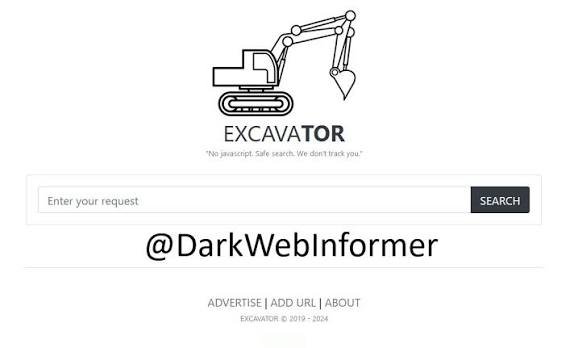
Excavator is a lightweight, onion-service-based search platform designed to help users discover .onion content.
- Why it matters: Its lightweight search experience can make it useful when researching current .onion content, although users should independently verify whether a result is still active and legitimate. However, users must understand is the Excavator search engine safe, as searching for .onion content can expose users to malicious sites alongside legitimate results.
- Who uses it: OSINT researchers, threat intelligence analysts, and regular Tor users who need current information without wading through years of dead links.
- Strengths: The interface is text-based and loads quickly over Tor. It requires no registration and its lightweight design makes it oriented toward discovering onion content.
- Limitations: It features an unfiltered index that includes phishing clones and scams. It requires the user to manually verify URLs before clicking, and its overall index size is smaller compared to older engines.
- Beginner suitability: Moderate. The interface is easy to use, but the lack of safety filtering means beginners are at a higher risk of clicking on malicious clones.
3. Haystak
The Haystak search engine is a relatively newer entry that focuses heavily on providing a modern user experience with advanced search capabilities.
- Why it matters: It bridges the gap between large, unfiltered indexes and modern usability by offering advanced filtering options that older engines lack.
- Who uses it: Power users who need advanced search operators (like exact phrase matching or date filtering) to narrow down broad results.
- Strengths: Advanced search syntax, a large claimed index, and a modern interface that can be useful for targeted OSINT queries.
- Limitations: The sheer volume of results can be overwhelming without using strict search filters. Like Excavator, it is unfiltered and requires careful URL verification.
- Beginner suitability: Moderate to high, provided the user takes the time to learn basic search operators to filter out irrelevant or malicious results.
4. Torch
Torch is a long-running dark web search engine associated with a large index of .onion pages.
- Why it matters: Because dark web indexes can contain outdated entries, results from Torch may include sites that are no longer accessible. It serves as a broad, historical record of the dark web, though the reliability of any single link varies greatly.
- Who uses it: OSINT analysts, digital forensics experts, and researchers looking for historical data, older references, or broader context on hidden services.
- Strengths: It is associated with a large index of historical .onion data, making it useful for finding references to older or defunct websites. It features a simple, no-frills search functionality.
- Limitations: There is a high percentage of outdated or dead links. The user interface is outdated, and it offers limited content filtering or moderation.
- Beginner suitability: Low. The volume of dead links and unfiltered results makes it frustrating and potentially risky for casual users.
5. DarkDuck
DarkDuck functions as both a search engine and a dark web news portal. The site regularly publishes articles about new onion services, security updates, and marketplace closures.
- Why it matters: It combines a searchable index with editorial context, helping users understand what they are looking at before they click a link.
- Who uses it: Users who want to stay updated on dark web news while searching for links, as well as researchers looking for contextual background on specific hidden services.
- Strengths: Dual functionality (news + search) and community commentary that can help verify the legitimacy of a site.
- Limitations: The search index itself is smaller than Excavator or Haystak, meaning it may not return results for highly obscure queries.
- Beginner suitability: High, due to the educational nature of the accompanying articles and the contextual warnings provided in search results.
Dark Web Search Engines Comparison Table
| Search Engine | Best For | Filtering | Index Focus | Beginner Friendly |
|---|---|---|---|---|
| Ahmia | Moderated discovery | Yes | Curated onion content | High |
| Excavator | Current discovery | Limited | Onion discovery | Moderate |
| Haystak | Advanced searches | Limited | Broad indexing | Moderate |
| Torch | Historical research | Limited | Large/historical index | Low |
| DarkDuck | Search + context | Varies | Smaller index | High |
How to Evaluate and Use These Tools Effectively
Using dark web search engines requires a strict adherence to operational security. The process is fundamentally different from browsing the clearnet.
First: Foundation setup
You must use software that can connect to the Tor network. For research involving untrusted websites, consider using Tor Browser's strongest available security setting and understand which web features it disables. Understanding what a Tor browser is, including its legality, safety, and tracking in 2026 is the foundational knowledge required here.
Next: Fix common search habits
Never trust a search result URL at face value. When an engine returns a result, do not click it immediately. Copy the URL and cross-reference it against trusted community directories like the Excavator official onion link page on OnionLink or the DarkStats threat intelligence platform. If the URL does not exactly match a separately verified address, treat it as untrusted and do not proceed until its authenticity has been independently confirmed.
Finally: Improve your research strategy
Treat search engines purely as intelligence-gathering tools, not security gateways. Use them to identify the name or context of a site, then access the destination through a previously verified bookmark or independently authenticated address. This approach can substantially reduce the risk of accidentally visiting a phishing clone, but it does not eliminate every security risk.
Which Dark Web Search Engine Should You Use?
There is no universally superior dark web search engine. "Best" depends entirely on your specific research objective. These recommendations are based on usability, filtering, search functionality, index characteristics, freshness, and suitability for legitimate research—not on the total number of indexed pages.
- Best suited for beginners: Ahmia. Its moderation and clearnet-facing functionality provide a safer environment to learn how onion services operate without immediate exposure to high-risk content.
- Best suited to broad discovery: Excavator, based on its lightweight search-oriented design.
- Best suited for advanced searching: Haystak. If you need to use boolean operators or exact-phrase matching to filter out noise, its syntax makes it a practical choice.
- Best suited for historical research: Torch. If you are investigating a site that was operational years ago, its older, broader index may hold archived references.
- Best suited for search + news context: DarkDuck. If you need background information or community commentary on a specific onion service alongside your search results, its dual-purpose format is ideal.
Are Dark Web Search Engines Safe?
A critical concept for researchers to understand is that search engine safety does not equal destination safety.
Just because a .onion site appears in a search engine's results does not mean the search engine has verified its safety, legitimacy, or security. Search engines index the dark web automatically. Therefore, search results should be treated as leads, not endorsements.
When using these tools, you are exposed to several risks:
- Phishing clones: Malicious actors create exact replicas of legitimate sites, which search engines index alongside the real targets.
- Malicious downloads: Search results can point to pages hosting malware disguised as legitimate software or documents.
- Fake login pages: Results frequently lead to credential-harvesting portals.
- Outdated onion addresses: Index decay means you may be directed to a dead site, or worse, a domain that has been repurposed by a threat actor after the original owner abandoned it.
- Impersonation: Sites may use similar names or branding to trick users.
- Tracking/logging considerations: Privacy practices vary between search engines. If a service's logging policies cannot be independently verified, avoid assuming your search activity is completely private.
Because of these risks, independent URL verification is mandatory before interacting with any destination found through a dark web search engine.
Common Problems & Fixes
Problem: You keep hitting dead links on older engines like Torch
Fix: This is the nature of a historical index. Because many of its entries are outdated, clicking through will often lead to disconnected sites. If your priority is finding potentially active content, an engine focused on current discovery may be more appropriate.
Problem: A search engine isn't returning the results you need
Fix: Some engines apply filtering and moderation that can prevent some categories of content from appearing. If an engine does not return the material you need for legitimate research, consider another search source while applying the same URL-verification and safety precautions.
Problem: You aren't sure if a result is a phishing clone
Fix: Do not click the link. Copy the .onion URL and cross-reference it on a verified link directory or the service's official community forum page. If the URL does not exactly match a separately verified address, treat it as untrusted and do not proceed until its authenticity has been independently confirmed.
Pro Tips
- Use boolean operators effectively: Some engines, such as Haystak and Excavator, may support basic operators. Use quotation marks for exact phrases (e.g., "data breach") and minus signs to exclude terms (e.g., marketplace -drugs) to clean up your results.
- Leverage clearnet-facing search for speed: If you are just looking to see if an .onion domain exists or what basic text it holds, using Ahmia’s clearnet functionality is significantly faster than loading results over the Tor network.
- Search for PGP keys, not site names: When tracking a specific entity across these engines, search for their PGP fingerprint. Site names and usernames can change, while a particular PGP key can provide a more persistent identifier when its fingerprint is independently verified. Ensure you are understanding what PGP is and how it works to use this method effectively.
- Understand the indexing lag: No dark web search engine indexes in real-time. A newly launched site may not appear immediately because search engines update their indexes on different schedules.
Safety & Best Practices
None of these search engines act as a security filter for the websites they index. Your safety relies entirely on your browser configuration and personal discipline. Understanding what cybersecurity is helps you recognize the traps present in unindexed environments.
Never download files directly from search engine results, regardless of which engine you use. Malware is frequently distributed through fake document downloads.
For users concerned about their network footprint, reviewing a Tor vs. VPN safety and privacy comparison for 2026 is useful, though it will not protect you from the phishing sites indexed by unfiltered engines. Tor provides network-level privacy protections, but it does not guarantee that an individual website or search service cannot collect information about your activity.
Related Guides
- Is Excavator Search Engine Safe? What Users Should Know
- Excavator vs Ahmia vs Torch: Which Is Better?
- Deep Web vs Dark Web: Understanding the Layers
- Best Tools for OSINT Researchers
FAQ
Are dark web search engines illegal to use? Using a dark web search engine is not inherently illegal in many jurisdictions, but laws vary by country and what you access or do through the service can create legal issues.
Can I access these search engines without the Tor Browser? Some search engines, including Ahmia's clearnet-facing services, can be accessed without directly opening a .onion site. To access a .onion service itself, however, you need software or a service that can connect to the Tor network.
Why are there so many dead links on these platforms? Dark web indexes can contain outdated entries because sites frequently change addresses or shut down to avoid attacks or law enforcement action. Search engines cannot always keep up with the volatile nature of the network, leading to index decay.
Which search engine is the safest? A moderated search engine such as Ahmia may be a more appropriate starting point for beginners due to its filtering. However, moderation does not mean every result is guaranteed to be safe, and URL verification is still required regardless of the engine you use.
Conclusion
Finding reliable information on the Tor network requires moving past static link directories and understanding how dark web search engines actually function. Tools like Ahmia, Excavator, Haystak, Torch, and DarkDuck each serve distinct purposes, from moderated discovery to historical OSINT research. The most effective approach is to avoid relying on a single platform, treat search results as unverified leads, cross-reference any .onion address against a trusted source, and maintain strict operational security regardless of which dark web search engines you choose to use.