

If you're dealing with connection timeouts when trying to access Dread, you're not alone. This is a common issue, and it often happens because users expect the same uptime from a dark web hidden service as they do from a standard clearnet website. Many beginners struggle due to outdated information, misunderstanding how Tor infrastructure handles traffic, or panicking and falling for phishing sites.
In this guide, you'll learn:
- what "why is Dread Forum down" actually means in a technical context
- why these outages occur so frequently
- what current threat intelligence says about the attacks
- practical ways to check the forum's real status
- common mistakes that lead to compromised accounts during outages
Quick Answer
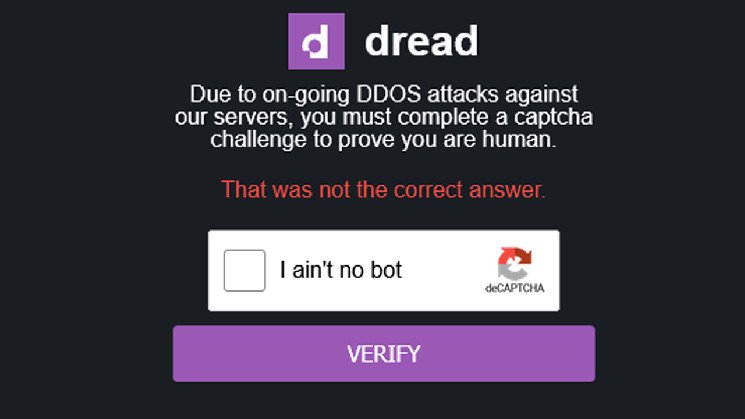
Why is Dread Forum down? Dread is almost always down due to massive Distributed Denial of Service (DDoS) attacks or scheduled server maintenance. The platform's Tor hidden service infrastructure struggles to filter these artificial traffic floods. The safest response is to wait and avoid searching for alternative mirror sites.
Evidence Snapshot
| Topic | Current Evidence |
|---|---|
| DDoS prevalence | Cybersecurity reports indicate DDoS-for-hire services make large-scale attacks cheap and highly accessible. |
| Infrastructure limits | Technical analyses show .onion services lack built-in protections like clearnet CDNs (e.g., Cloudflare). |
| Mirror scams | Observational findings confirm a massive spike in phishing links during active Dread outages. |
| Law enforcement seizures | There are no publicly documented cases of Dread being permanently seized by law enforcement. |
| Recovery rate | Current consensus shows the forum historically recovers from outages, though downtime can last days or weeks. |
What Is "Why Is Dread Forum Down"?
When users ask why Dread is down, they are usually encountering error messages like "Connection Refused," "502 Bad Gateway," or the Tor browser simply spinning indefinitely.
Dread is a hidden service hosted on the Tor network. Unlike Reddit or Google, which use massive, globally distributed server networks to absorb traffic spikes, Dread runs on a much smaller, decentralized infrastructure designed specifically to hide its location. Understanding the difference between the deep web and dark web helps clarify why these addresses are inherently harder to keep online. When the site goes down, it means this infrastructure is either overwhelmed, undergoing intentional maintenance, or temporarily disconnected by the administrator to mitigate an attack.
For a complete overview of the platform itself and how it normally functions when operational, you can read our What is Dread Forum guide.
Beginners often assume an offline forum means it has been shut down by police. In reality, the dark web operates on a "trust but verify" model where temporary downtime is a routine part of operational security.
Current Research or Industry Status
Security experts currently view DDoS attacks as the primary weapon of choice for disrupting dark web communities. Established facts show that launching a terabit-per-second attack costs just a few hundred dollars on the clearnet, making it easy for rival forums, extortionists, or ideological groups to target Dread.
However, significant uncertainties remain regarding the exact defensive capabilities of the Dread administrator (Hugbunter). Current developments in 2026 suggest that while the platform has implemented some anti-DDoS measures, the inherent limitations of the Tor protocol still make it highly vulnerable to sustained flooding.
Why This Happens
Understanding why Dread goes offline requires looking at the root causes of hidden service disruptions.
Wrong assumptions
Users assume the site has been seized by the FBI or Europol. While law enforcement does target dark web sites, a sudden, prolonged outage with no warning is almost always a DDoS attack, not a takedown.
Outdated information
Users expect 99.9% uptime. They do not realize that maintaining anonymity on the dark web often requires sacrificing the redundant server architectures that keep clearnet sites online.
Technical limitations
The Tor network does not have an equivalent to Cloudflare. There is no easy "toggle switch" a hidden service can use to block malicious traffic while letting legitimate Tor users through.
Environmental factors
Dread is the central hub for darknet market discussions. Competing forums frequently attack Dread to drive traffic to their own platforms, or scammers attack it out of revenge for being exposed.
Why It Matters
Understanding the real reason for the outage is crucial because your reaction to a downed forum is where the actual danger lies.
If you panic and go to Google searching for "Dread mirror" or "Dread alternative link," you will immediately be presented with phishing sites. Attackers deliberately time their DDoS campaigns to coincide with the release of these fake links, knowing that frustrated users will let their guard down. To understand the broader context of these risks, reading our guide on whether Dread Forum is safe provides essential context on how these outages are weaponized.
Beginners often get confused because fake sites are set up to look exactly like the real Dread, complete with copied posts. Misinformation spreads easily on clearnet social media during these windows, with users falsely claiming the site has been permanently shut down.
How to Solve or Understand the Topic
To handle a Dread outage safely, you need a strict protocol that prioritizes patience over convenience.
Step 1: Identify the error
If the Tor browser shows "Connection Refused" or the page fails to load after a minute, assume it is a server-side issue. Do not refresh the page aggressively, as this adds to the server's burden.
Step 2: Check a trusted status source
Do not use Google. Use a dedicated dark web intelligence platform like DarkStats to check the live status of the forum. You can quickly verify if the service is globally offline by checking the dedicated Dread Forum listing on DarkStats. These platforms monitor the .onion address and will note if it is down for everyone or just experiencing regional routing issues.
Step 3: Wait and verify the link
When the site eventually comes back online, attackers will still be pushing fake links. You must verify you are using the correct URL. You can do this by checking a trusted directory for the official Dread onion link rather than trusting links shared on Telegram or Reddit.
Common Mistakes
Mistake: Searching for "Dread mirror" on Google
Why it happens: Users are impatient and want to read forum updates immediately. How to avoid it: Accept that there is no such thing as a safe Dread mirror. Any site claiming to be one is a phishing operation designed to steal your PGP key.
Mistake: Trusting Telegram "official" channels
Why it happens: Scammers create channels named "Dread Official News" to distribute fake links during outages. How to avoid it: The real administrator communicates through the forum itself once it is back online. Do not trust external communication channels.
Mistake: Trying to access Dread via a VPN instead of Tor
Why it happens: Users think the Tor network is broken and try to bypass it. How to avoid it: A VPN cannot connect to a .onion address. You must use the Tor browser. If the .onion is down, a VPN will not help.
Factors That Affect Results
Several variables determine how long an outage will last:
- Attack size: Small volumetric attacks might be absorbed in hours; large, sophisticated attacks can take weeks to mitigate.
- Server migration: If Hugbunter decides to move the server to a new host to escape the attack, downtime will be significantly longer.
- Tor network health: Occasionally, the Tor network itself experiences global degradation, which can mimic a site-specific outage.
Comparison Table
| Outage Cause | Duration | User Risk Level | Key Indicator |
|---|---|---|---|
| DDoS Attack | Hours to Weeks | High (Phishing risk) | Sudden failure, fake links appear immediately |
| Scheduled Maintenance | Minutes to Hours | Low | Often announced in advance on the forum |
| Server Migration | Days to Weeks | High (Link changes) | Extended downtime, new PGP-signed link required |
| Law Enforcement Seizure | Permanent | N/A | Different error page, no return (Not applicable to Dread's history) |
What Current Evidence Suggests
| Topic | Evidence Strength |
|---|---|
| DDoS being the primary cause of downtime | Strong (Widely confirmed by the administrator and OSINT researchers) |
| Fake mirrors causing user compromise | Strong (Documented extensively in cybersecurity threat reports) |
| Dread being permanently seized | Very Weak (No evidence supports this having occurred) |
| Admin abandoning the project | Weak (Despite long outages, the site has historically returned) |
Pro Tips
- Keep a local copy of Hugbunter's PGP key: If the server migrates, the only way to know the new official link is real is by verifying the PGP signature on the new site against the administrator's known public key. If you aren't familiar with this process, reading a guide on what is PGP explains how to use these keys for identity verification.
- Use an RSS feeder for Tor: Some security researchers set up RSS feeds that ping when a specific .onion service goes online or offline, removing the need to manually check and risk exposure to fake links.
- Ignore the FUD (Fear, Uncertainty, Doubt): During outages, users on other platforms will spread rumors that the admin has exited scammed or been arrested. Treat all clearnet discussion of a dark web outage as unverified.
Safety / Best Practices
Follow reliable guidance from established privacy advocates. Verify all .onion links through cryptographic methods. Understand the limitations of your tools; if the site is down, no tool can force it to load. Understanding the legality and safety of the Tor browser helps set realistic expectations for what the software can and cannot do during an outage. Avoid unsupported claims from users offering "backdoor access" or "premium VIP links" during outages. Your safety depends on patience and refusing to compromise your operational security for the sake of reading a forum post.
Related Guides
- How to Find the Official Dread Onion Link Safely
- Is Dread Forum Safe? Risks, Scams & Security Tips
- What Is Dread Forum? Complete Beginner Guide
- How to Spot Dark Web Phishing Scams
FAQ
Is Dread down right now? Because Dread's uptime fluctuates daily, the most accurate way to check is by using a trusted dark web monitoring service. If you cannot connect via the Tor browser, it is likely undergoing a DDoS attack or maintenance.
Did the FBI seize Dread? There is no public evidence to suggest Dread has ever been seized by law enforcement. Every major outage in the platform's history has eventually resulted in the site returning online under the same administration.
How long does Dread usually stay down? Downtime varies wildly. Minor DDoS attacks might be mitigated in a few hours. Major attacks or emergency server migrations can leave the forum offline for several weeks.
Are there any official Dread mirrors? No. The Dread administrator has explicitly stated that there are no official mirrors or clearnet proxies. Any site claiming to be a mirror while the main site is offline is a phishing trap.
Why does Dread get DDoSed so much? Dread is the largest dark web forum, making it a high-value target. Competing forums attack it to steal users, and scammers attack it to disrupt community scam warnings about their operations.
How do I know when Dread is back up? The safest way is to periodically check a verified dark web intelligence directory. Once the service is detected as live, you can proceed to the official .onion link using your Tor browser.
What does a 502 error on Dread mean? A 502 Bad Gateway error typically means the Tor hidden service is online, but the backend web server is overloaded or failing to respond. This is a strong indicator of an active DDoS attack overwhelming the server's resources.
Key Takeaways
- Main takeaway: Dread Forum goes down primarily due to DDoS attacks and server maintenance, not law enforcement seizures.
- Important limitation: There is no technical workaround on your end to fix a server-side DDoS outage; you must wait for the administrator to mitigate it.
- Most common mistake: Searching Google for "Dread mirror" during an outage, which leads directly to phishing sites.
- Best practice: Bookmark a trusted dark web status page and wait patiently for the official site to return.
- Current evidence: Every major outage in Dread's history has been temporary, though recovery times can be unpredictable.
- Next step: Verify the current status of the forum using an intelligence platform before attempting to connect.
Conclusion
Encountering an offline screen when visiting Dread is frustrating, but it is a routine reality of using hidden services. The platform's architecture prioritizes anonymity over availability, making it highly susceptible to cheap DDoS attacks. Understanding that these outages are temporary—combined with a strict refusal to seek out alternative links—eliminates the primary risk associated with forum downtime. Patience is your best security tool. When the servers do come back online, always ensure you are navigating to the correct, verified portal to avoid the inevitable wave of phishing clones. To learn more about the platform's history and features while you wait, you can review our complete Dread Forum guide.